WEF NEXUS
The Water-Energy-Food (WEF) Nexus is a framework used by the World Economic Forum and international policy bodies to describe the systemic interdependencies between water, energy, and food. The premise is that you cannot manage one without affecting the others: producing energy requires massive amounts of water, agriculture consumes the majority of global freshwater, and food production is increasingly energy-intensive.
Here is the breakdown of the model and the structural reasons for its current failure:
The WEF Nexus: A Centralized Blueprint
The WEF model posits that because these resources are finite and linked, they must be managed through centralized, globalized governance. The goal is to optimize “resource security” by coordinating large-scale infrastructure projects, trade policies, and sustainability mandates across borders. It views the “Nexus” as a complex machine that, if fine-tuned by global institutional policy, can balance the needs of a growing population against environmental constraints.
Why the Model Is Failing
The fundamental flaw of the WEF Nexus is its reliance on legacy, centralized architectures that are increasingly incapable of handling the realities of the 21st century.
-
Systemic Fragility: By attempting to manage resources through global, interconnected grids and massive trade dependencies, the model has created “single points of failure.” When a geopolitical event or supply chain disruption hits one node (e.g., fuel shortages or shipping bottlenecks), the entire Nexus collapses, as seen in the Global Kinetic Overwatch.
-
The Regulatory Bottleneck: The WEF approach favors top-down regulation and “sustainable” initiatives that often ignore the thermodynamic reality of industrial production. These policies create artificial scarcity and drive up the cost of energy, which in turn spikes the cost of water desalination and food production.
-
Lack of Sovereignty: The model is built on cooperation rather than independence. It forces nations and industries to rely on centralized utility models that are not designed for the high-compute, AI-accelerated era. It is a system of “managed dependence” that is now buckling under the weight of its own inefficiency.
-
Decoupling from Reality: While the WEF plans for a centralized future, the world is moving toward decentralization. Real-world demand for energy—driven by the AI boom—is outpacing the capacity of the brittle, WEF-managed grid.
The Alternative: The Sovereign Reality
At PMG, we reject the premise that these resources must be managed by global policy. We believe the Nexus is solved not by institutional coordination, but by hardware-level autonomy.
By deploying TRON GENSETS and ATMAG GENSETS “Behind-the-Meter,” we provide the physical infrastructure—the power—that makes the WEF’s reliance on centralized grids obsolete. We are moving from a model of global management to one of local, sovereign industrial power.
WWEHFELS NEXUS
THE WEF NEXUS: A FAILED ARCHITECTURE
The Water-Energy-Food (WEF) Nexus is a framework of managed dependence. Its premise is that these resources—the bedrock of human survival—must be governed by centralized, globalized policy. It views the Nexus as a machine to be tuned by institutional mandates, relying on legacy grids and brittle, interconnected supply chains.
The result? Systemic fragility. Every time a node in their grid fails—be it through geopolitical instability, fuel-price volatility, or infrastructure decay—the entire system buckles. It is a model designed for oversight, not for resilience.
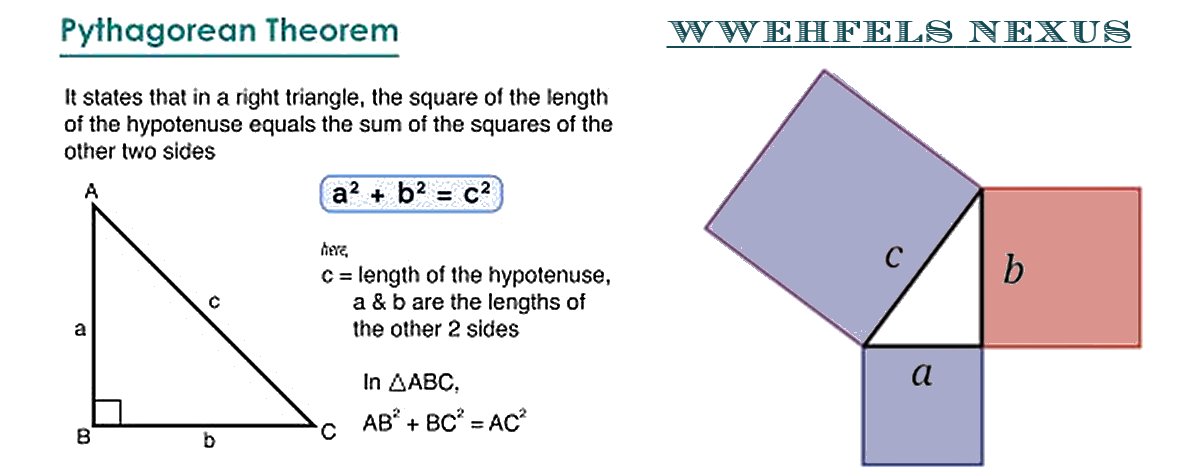
THE WWEHFELS PYTHAGOREAN NEXUS: THE SOVEREIGN ALTERNATIVE
At Permanent Magnetic Energy (PMG), we have engineered the physical successor to the WEF’s failed theory. We do not manage scarcity through global policy; we eliminate it through hardware-level autonomy.
Our WWEHFELS Pythagorean Nexus is based on geometric and thermodynamic reality:
-
Engineering vs. Governance: The WEF relies on top-down regulations that inflate costs. We rely on the ATMAG GENSET and TRON GENSET architectures to provide fuel-free, perpetual energy generation. We are moving from a model of cooperation with the grid to absolute independence from it.
-
The Sovereign Perimeter: The WEF Nexus seeks to connect you to a global web you cannot control. The WWEHFELS Nexus secures your own land, your own water, and your own power behind your own perimeter. It is the application of the Pythagorean principle: when you square the pillars of Wind, Water, Electricity, Health, Food, Energy, Land, and Soil, the result is a perfectly balanced, autonomous Hypotenuse—Sovereign Survival.
-
Infrastructure as a Right: You do not beg for electricity; you mint it. By deploying our technology “Behind-the-Meter,” you bypass the utility middleman entirely. We are replacing the WEF’s “managed dependence” with American Industrial Sovereignty.
The mission is clear: Get off the grid, out of the supply chain, and behind your own perimeter. The WEF Nexus plans for a centralized future; we are building the autonomous one.
PLEASE CONSIDER OUR
WWEHFELS PYTHAGOREAN NEXUS MODEL